How to Use the Coffee Ratio Calculator
The calculator above runs the coffee to water ratio math for you, both directions:
- Pick a brew method to load a common starting ratio, or pick a ratio yourself.
- Enter what you know: how much water you’re brewing, or how much coffee you have.
- Read the other side in grams, ounces and approximate tablespoons.
Start with the method’s range. Brew it, taste it, then nudge the ratio one step and brew again. That’s the whole system.
What a Coffee to Water Ratio Means
A coffee to water ratio tells you how much water to use for each part of coffee, by weight. 1:16 means 1 gram of coffee for every 16 grams of water. So 20 g of coffee at 1:16 takes 320 g of water. Flip it around: 500 g of water at 1:16 takes about 31 g of coffee.
The first number is always the coffee. The bigger the second number, the more water per gram of coffee, and the lighter the cup. 1:15 is stronger than 1:17. Cold brew concentrate at 1:4 is a different animal altogether.
The ratio is based on the water you brew with, not the coffee that ends up in the mug. Grounds hang onto some water, so you’ll always pour out less than you put in.
Grams keep the math clean. A gram of water is a milliliter, and a fluid ounce of water weighs about 29.6 g.
Why Weigh Coffee Instead of Scooping
A scoop measures volume. A scale measures weight. How much coffee fits in a scoop changes with the grind, the roast and how packed the scoop is, so two level scoops can come out a few grams apart. A few grams is the difference between a good pot and a weak one.
A basic kitchen scale that reads in grams fixes that. Weighing also makes a good cup repeatable: write the numbers down and brew the same thing tomorrow. Same reason you measure twice before you cut.
Coffee Ratio Chart by Brew Method
These are common starting points, not rules. The last column shows the coffee you’d need for 500 g of water, about 17 oz.
| Method | Common starting ratio | Grind | Coffee for 500 g of water |
|---|---|---|---|
| Pour over | 1:15 to 1:17 | Medium-fine | 29 to 33 g |
| Drip coffee maker | 1:15 to 1:18 | Medium | 28 to 33 g |
| French press | 1:12 to 1:16 | Coarse | 31 to 42 g |
| Cold brew concentrate | 1:4 to 1:5 | Coarse | 100 to 125 g |
| Cold brew, ready-to-drink | 1:8 to 1:10 | Coarse | 50 to 63 g |
Espresso, for reference: espresso runs around 1:2, but it’s measured differently. That’s grams of ground coffee in to grams of liquid espresso out, so 18 g in gives about 36 g out. The brewed-coffee ratios above work the other way, by the water going in.
Why do the ranges differ? A french press and cold brew soak the grounds in all the water at once. Drip and pour over pass the water through. Grind size, contact time and temperature all change how much flavor comes out, so each method has its own sweet spot. Cold brew uses no heat at all, which is why it needs so much more coffee and so much more time.
How to Adjust Coffee Strength
Separate two different problems: strength and extraction.
- Strength is how concentrated the cup is, watery on one end and heavy on the other. You fix strength with the ratio.
- Extraction is how much flavor the water pulled out of the grounds. Under-extracted coffee tastes sour and thin. Over-extracted coffee tastes bitter and harsh. You fix extraction with grind, time and water temperature.
To adjust strength:
- Too weak: lower the second number. Go from 1:17 to 1:16, or from 1:16 to 1:15.
- Too strong: raise it. Go from 1:15 to 1:16, or add a splash of hot water to the finished cup.
- Move one step at a time, and change one thing per brew. Change the ratio and the grind at once and you won’t know which one worked.
A clean cup that’s simply too weak needs more coffee, not a finer grind. A bitter cup usually needs a fix to the grind or the brew time, not less coffee.
Tablespoons, Scoops and Ounces: Know the Caveats
Tablespoon numbers are approximate. About 5 g per level tablespoon of ground coffee is a common rough conversion, but real spoonfuls vary with grind, roast and whether you level them off. Use them to get close, and use a scale to get it right.
- Scoops: many coffee scoops hold about 2 tablespoons, roughly 10 g, but plenty don’t. Check yours against a tablespoon once.
- Fluid ounces vs. weight ounces: water is measured in fluid ounces, which is volume. Coffee is sold by weight. A 12 oz box of ROOFERS COFFEE is 12 oz by weight, or 340 g.
- How far a box goes: at 10 g of coffee per 6 oz of water, a standard drip starting point, 340 g brews about 34 six-ounce coffee maker cups, or about 17 twelve-ounce mugs. Brew it stronger and you’ll get fewer.
Brew Guides for Every Method
The calculator gives you the numbers. The guides give you the rest: grind, timing and what to fix when it tastes wrong.
- Drip coffee maker guide: how much coffee per cup, and a chart for 4 to 12-cup pots.
- French press guide: coarse grind, a 4-minute steep, and grams and tablespoons by press size.
- Pour over guide: the bloom, the pour and how to dial in the grind.
- Cold brew guide: concentrate or ready-to-drink, steep time and storage.
- Everything in one place: the Jobsite Brew Guide.
Pick a Coffee to Go With the Numbers
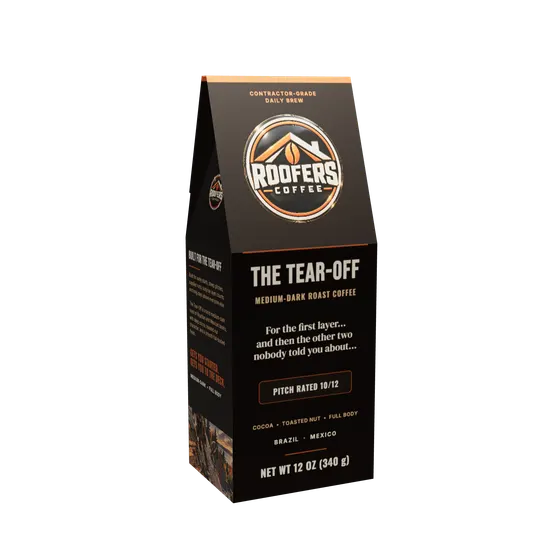
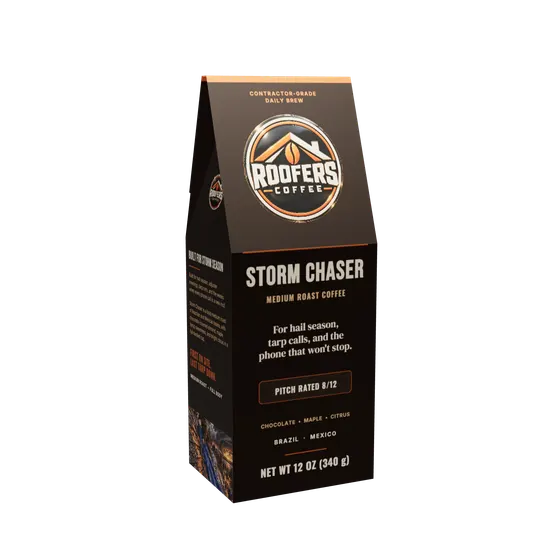
The ratio is half the job. The coffee is the other half. Lighter roasts like Skylight shine in a pour over. Storm Chaser and The Tear-Off have the body for a press, a drip pot or cold brew. The pitch rating scale shows where each roast sits, from light at 4/12 up to Ridge Cap at 11/12.
Need numbers for the roof instead of the pot? The Roofer’s Toolbox has the roof pitch calculator too.