What Cold Brew Is (and Isn’t)
Cold brew is coffee made with time instead of heat. Learning how to make cold brew takes about two minutes: you soak coarse grounds in cold or room-temperature water for half a day or longer, then strain them out. No kettle. No machine. No babysitting.
It isn’t iced coffee. Iced coffee is hot coffee poured over ice. Cold brew never touches hot water, so it tends to come out smoother and rounder, without the sharp edge hot coffee can pick up as it cools. The method is the same whether it’s one jar for you or a pitcher for the whole crew. Only the size of the container changes.
The Cold Brew Ratio: Concentrate or Ready-to-Drink
The cold brew ratio is the weight of coffee to the weight of water. There are two common ways to go:
- Concentrate: around 1:4 to 1:5 by weight. One part coffee to four or five parts water. Strong stuff you cut before drinking.
- Ready-to-drink: around 1:8 to 1:10 by weight. Pour it over ice and go.
Treat both as starting points, not law. Weigh if you can. A gram of water is a milliliter, so one kitchen scale handles both sides of the math.
| Water | Concentrate 1:4 | Concentrate 1:5 | Ready-to-drink 1:8 | Ready-to-drink 1:10 |
|---|---|---|---|---|
| 1 quart (about 946 g) | 237 g | 189 g | 118 g | 95 g |
| 2 quarts (about 1,893 g) | 473 g | 379 g | 237 g | 189 g |
| 1 gallon (about 3,785 g) | 946 g | 757 g | 473 g | 379 g |
For reference, a 12 oz box of ROOFERS COFFEE is 340 g. At 1:5, one box covers about 1,700 g of water, a little under 2 quarts. At 1:8, it covers about 2,720 g, just shy of 3 quarts. For any other batch size, run it through the coffee ratio calculator.
The grounds soak up water and hang onto it, so you’ll strain out less than you put in. That’s more noticeable with concentrate, where the jar is packed with coffee.
Grind It Coarse
Coarse, like rough sea salt or cracked pepper. Fine grounds over-extract during a long steep, turn the batch muddy and bitter, and clog every filter you own. If you buy whole bean, set the grinder to its coarse end right before you mix. If a finer grind is all you have, it still works: shorten the steep and strain through paper.
How to Make Cold Brew, Step by Step
- Weigh the coffee. Use the table above or the calculator.
- Grind coarse, ideally right before you mix.
- Combine the coffee with cold, good-tasting water in a jar, pitcher or food-safe bucket.
- Stir until every ground is wet. Dry clumps floating on top don’t brew. Stir again after a few minutes.
- Cover and steep for 12 to 24 hours.
- Strain the grounds out.
- Dilute if it’s concentrate, then chill and serve over ice.
How Long to Steep Cold Brew
A 12 to 24 hour steep is the common range. Where you land depends on temperature:
- Room temperature: extraction runs faster, so the shorter end, around 12 to 16 hours, is a good first try.
- In the fridge: cold slows everything down, so plan on the longer end, closer to 18 to 24 hours.
Too short and it tastes thin and a little sour. Too long and it goes woody and bitter. Taste a spoonful at the low end of your window and strain when it’s right. Write down what worked so next week’s batch comes out the same.
How to Strain Cold Brew Without Special Gear
You don’t need special gear. Use what you have:
- Fine-mesh strainer, then a second pass through a paper filter for a clean cup.
- Paper coffee filters in a pour-over cone or a drip basket. Slow, but the cleanest result.
- Nut-milk bag or cheesecloth. Good for big batches. Lift it out and let it drain.
- French press. Brew right in it, press, pour. Handy for small batches, and the french press guide covers the gear.
- Cold brew pitcher with a filter basket. Grounds go in the basket; the basket comes out.
Whatever you use, let it drain on its own. Squeezing or wringing the grounds pushes bitter sludge into the batch.
Diluting Cold Brew Concentrate
Concentrate is meant to be cut. A good first try is equal parts concentrate and cold water or milk, then adjust. On paper, cutting a 1:4 or 1:5 concentrate with the same amount of water lands you around 1:8 to 1:10, the same range as a ready-to-drink batch. Ice melts, too, so pour it a little strong and let the ice finish the job.
Dilute only what you’ll drink that day. Straight concentrate takes up less room in the fridge and in the cooler.
Storing Cold Brew
Keep it cold and covered. Strain it completely before you store it, because grounds left in the jar keep extracting. A sealed jar or jug in the fridge is the move, and it’s best to drink it within about a week. The flavor fades and goes flat after that. If it smells or tastes off, pour it out.
Cold Brew on the Jobsite
Cold brew is built for crews. The coffee does its work while you sleep.
- Batch it the night before. Start a room-temperature batch after dinner and it’s had its 12 hours by the time you’re loading the truck. Prefer the fridge method? Start it the morning before.
- Strain at the house, not on the roof. Nobody wants grounds in the tailgate cooler.
- Use an insulated jug for hot roofs. Fill a big insulated water jug with ice and cold brew, or concentrate plus cold water. Keep it in the shade with the lid shut.
- Keep it out of the cab. A closed truck in summer gets hot fast. Treat cold brew like lunch.
- It’s not your water. On a hot roof, drink plenty of water too. Coffee is the morale. Water is the job.
Best Roasts for Cold Brew
Medium to dark roasts are the easy pick. The long, cool steep brings out chocolate, nut and caramel flavors and keeps things smooth, which is right where these three live:
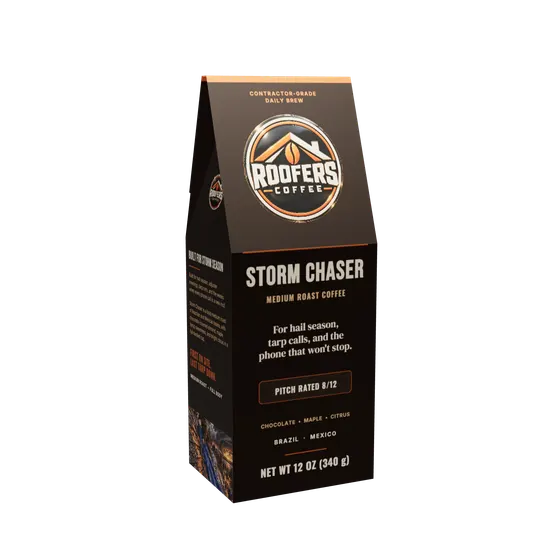
- Storm Chaser: medium, 8/12. Chocolate-covered almond, maple syrup and citrus, with a bold, full body. Great over ice.
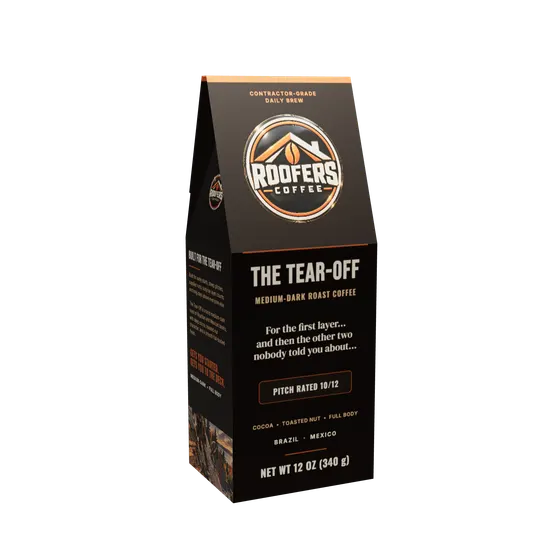
- The Tear-Off: medium-dark, 10/12. Cocoa and toasted nut, full body, smooth enough to drink black. A safe bet for a big crew batch.
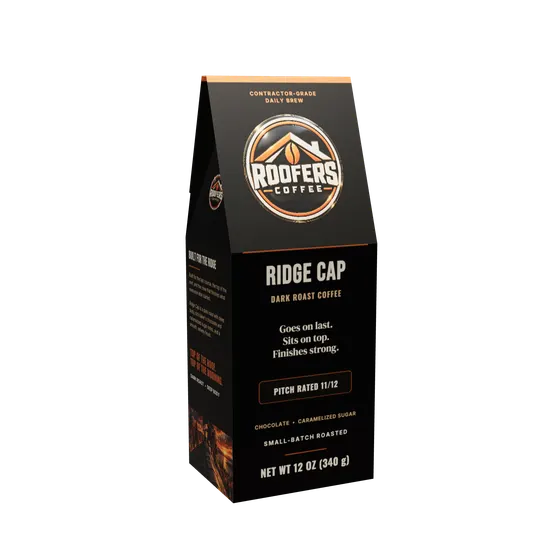
- Ridge Cap: dark, 11/12. Baker’s chocolate and caramelized sugar, with a deep body and a smooth, velvety finish. A strong pick if you take your cold brew with milk.
Every 12 oz box comes whole bean or ground and is roasted fresh when you order. Whole bean lets you grind coarse right before the steep. Not sure where your taste sits? The pitch rating scale runs from light at 4/12 up to Ridge Cap at 11/12. For hot methods, head back to the Jobsite Brew Guide.